
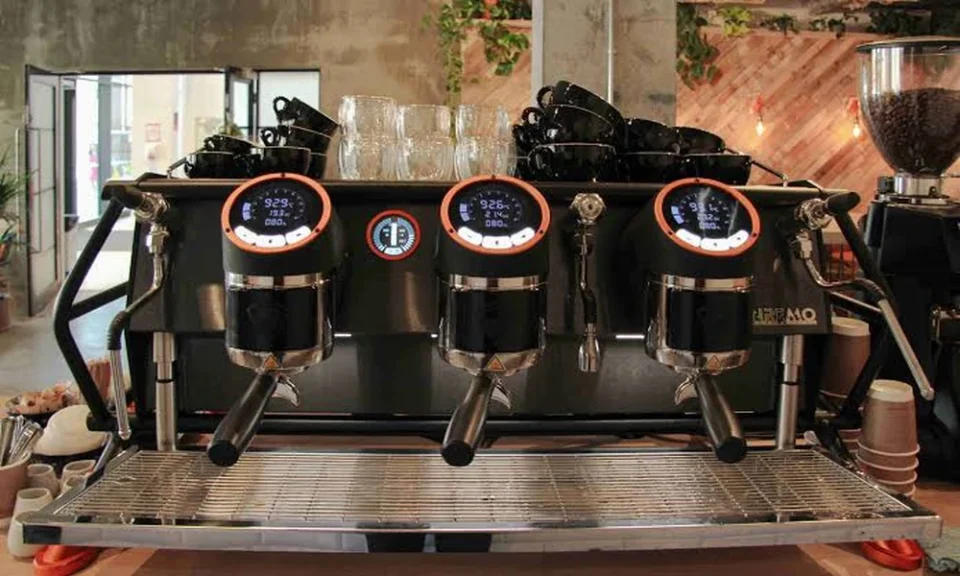
Many business owners assume the decision comes down to picking whichever model looks most impressive in a showroom, but daily throughput and staff training time usually matter far more than appearance once the machine is actually in use. A coffee machine for business needs to be matched to how many cups it will realistically serve each day, not to how it photographs on a countertop.
Estimating Daily Cup Volume Accurately
Underestimating demand leads to queues and a machine running near its duty cycle limit all day, while overestimating ties up capital in capacity that never gets used. Counting actual staff and visitor numbers over a representative week, rather than guessing from headcount alone, gives a far more reliable basis for sizing a machine correctly. Peak-hour clustering, such as a rush right after opening, matters as much as the daily total when checking a machine’s duty cycle rating.
Bean-to-Cup Versus Traditional Espresso Setups
Bean-to-cup machines automate grinding, dosing and brewing in one unit, minimising the training required for staff to produce a consistent cup. Traditional espresso setups need a trained barista to achieve the same consistency but offer more control over extraction and milk texture for businesses wanting a more crafted result rather than a purely automated one. Businesses without a dedicated barista on staff generally find the automated route the more practical choice day to day.
Matching Machine Type to Customer Expectations
A back-office pantry serving staff has very different expectations from a customer-facing café counter, where presentation and consistency directly affect repeat business. Businesses serving customers directly should weigh perceived quality more heavily, while an internal-use machine can prioritise speed and low maintenance over visual craft. Getting this distinction wrong in either direction tends to show up quickly, either in customer complaints or in an over-specified machine nobody in the office needed.
Footprint and Plumbing Requirements
Larger units often need a direct water line and drainage connection, which adds installation cost and limits placement options compared to a self-contained tank-fed machine. A compact commercial espresso machine with an internal tank suits businesses without easy access to plumbing near the intended counter location. Checking the tank’s refill frequency against actual daily volume avoids the inconvenience of a tank that needs topping up multiple times during a single busy shift.
Staff Training and Ease of Use
High staff turnover in hospitality and retail makes ease of use a genuine cost factor, since retraining a new team member on a complex machine takes time away from other duties. Touchscreen bean-to-cup machines with preset drink options reduce this training burden considerably compared to manual espresso equipment requiring practised technique. A machine that a new hire can operate confidently within a single shift saves real management time over a full year of staff turnover.
Maintenance Demands and Downtime Risk
Every additional moving part, from milk frothers to automatic descaling systems, adds another potential failure point that could take the machine offline during business hours. Businesses that cannot tolerate downtime, such as a busy retail counter, should weigh reliability history as heavily as features when comparing models. Asking a supplier for typical repair turnaround times, not just the warranty length, gives a clearer picture of real-world downtime risk.
Total Cost of Ownership Over Time
Purchase price is only the starting point; consumables, servicing, water filtration and eventual part replacement all add up over a machine’s working life. Comparing total cost over three to five years, rather than the upfront price alone, often changes which option actually represents the better value for a given business. A cheaper machine with expensive proprietary consumables can end up costing more over its working life than a pricier unit with widely available parts.
Scalability as the Business Grows
A machine sized exactly for current volume leaves no room for growth, forcing an early and costly upgrade if demand increases faster than expected. Choosing a model with some headroom above current needs, without over-investing in unused capacity, gives a business room to grow without repeating the selection process within a year or two. Businesses expecting a specific headcount increase within the next year should size the machine against that near-term figure rather than current volume alone.
Comparing Rental and Purchase Arrangements
Rental arrangements reduce upfront cost and typically bundle maintenance into a predictable monthly fee, which suits businesses wary of a large capital outlay. Purchasing outright can be more cost-effective over a longer horizon for a business confident in its volume projections and comfortable handling maintenance arrangements independently. Businesses still uncertain about their long-term volume often find a rental arrangement the lower-risk starting point until usage patterns become clearer.
Making the Final Decision for Your Business
Base the decision on realistic daily volume, staff turnover and how customer-facing the machine will be, rather than on features that sound impressive but go unused in daily operation. Trial the shortlisted options where possible before committing, since a brief hands-on trial often reveals practical quirks that a specification sheet never mentions. The right coffee machine for business is the one matched to how your business actually operates day to day, not the one with the longest feature list.
